Introduction
Tunisian crochet, often referred to as Afghan crochet, represents a sophisticated fusion of knitting and traditional crochet techniques that has captivated experienced fiber artists for generations. Unlike standard crochet, which completes each stitch individually, Tunisian crochet works multiple loops onto a long hook during a forward pass, then returns them in a reverse pass—creating a dense, textured fabric with remarkable drape and structural integrity. For crafters who have mastered basic stitches and garment construction, this technique unlocks entirely new creative dimensions: intricate colorwork that rivals stranded knitting, delicate lace patterns with unexpected stability, and seamless garment construction methods that minimize finishing work. The rhythmic, meditative quality of the two-pass system appeals to artisans seeking both technical challenge and therapeutic repetition. In today’s handmade marketplace, where consumers increasingly value unique textures and artisanal authenticity, Tunisian crochet offers experienced makers a distinct competitive advantage. This comprehensive guide moves beyond introductory tutorials to explore advanced applications, business implications, and professional refinements that transform skilled practitioners into true Tunisian crochet authorities. Whether you’re refining your technique for personal satisfaction or positioning your handmade brand for growth, understanding these nuanced applications will elevate your craft to new heights.
What This Topic Means for Crochet & Knitting Businesses
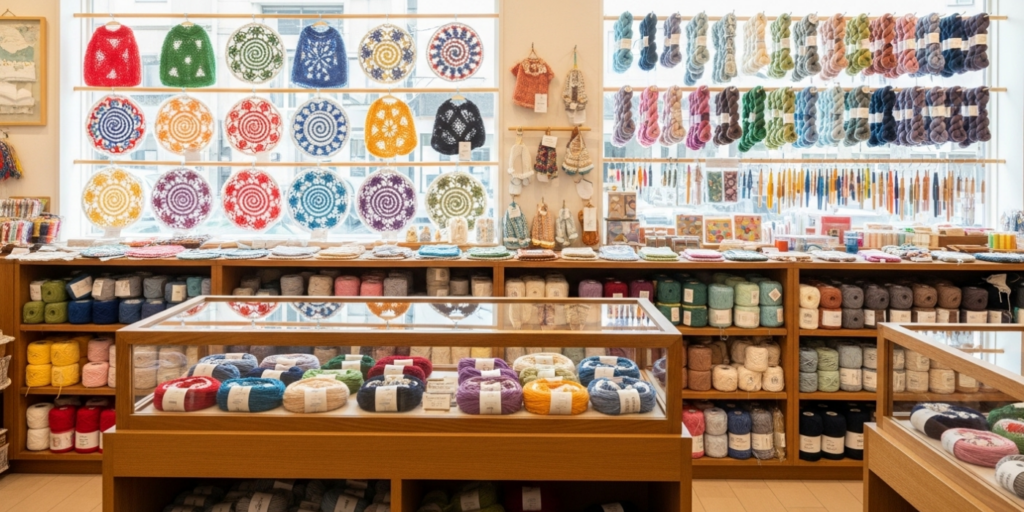
For established handmade businesses, Tunisian crochet represents more than just another technique—it’s a strategic differentiator in an increasingly saturated market. In many crochet businesses I’ve consulted with, owners who specialize in Tunisian work command 20–40% higher price points for comparable items versus standard crochet, primarily due to the perceived complexity and distinctive fabric quality. The technique’s inherent density creates garments with superior warmth-to-weight ratios, allowing makers to justify premium pricing for winter accessories while using less yarn than bulkier traditional methods. Furthermore, the visual texture of Tunisian fabric photographs exceptionally well for e-commerce, reducing returns related to texture expectations—a persistent challenge in online fiber sales.
From a production standpoint, experienced artisans report that Tunisian crochet’s rhythmic nature enables faster completion of large projects once muscle memory develops, improving hourly earnings without sacrificing quality. One designer I collaborated with transitioned her entire shawl line to Tunisian techniques after discovering customers specifically searched for “Afghan stitch scarves” during holiday seasons. This search behavior highlights an important SEO reality: while “crochet” is highly competitive, long-tail keywords like “Tunisian crochet blanket pattern” or “reversible Tunisian cowl” attract buyers with higher purchase intent and lower competition. For knitting businesses, incorporating Tunisian elements bridges audience segments—knitters drawn to its fabric resemblance often become crossover customers when presented with hybrid designs. Critically, the technique’s relative obscurity among mass-market producers preserves its artisanal appeal, allowing small businesses to maintain authenticity while scaling thoughtfully. When teaching workshops for craft entrepreneurs, I emphasize documenting your Tunisian process extensively; the visual storytelling of loops accumulating on that distinctive long hook generates exceptional social media engagement that converts followers into customers.
Why This Strategy Works Especially Well in the Crochet Community
The crochet community possesses unique characteristics that make Tunisian techniques particularly resonant for experienced practitioners. Unlike knitting communities where technique specialization often creates silos, crochet culture embraces hybrid approaches—makers routinely blend amigurumi, filet crochet, and tapestry techniques within single projects. This integrative mindset creates fertile ground for Tunisian adoption, as experienced crafters view it not as a separate discipline but as an expansion of their existing toolkit. From working with multiple crochet brands on technique integration, I’ve observed that Tunisian’s two-pass rhythm provides cognitive benefits for artisans experiencing creative burnout with standard crochet; the methodical forward-and-return motion offers meditative qualities that renew enthusiasm without requiring entirely new skill acquisition.
Moreover, the technique solves persistent pain points for advanced makers. Many experienced crocheters struggle with curling edges in stockinette-like fabrics or achieving true reversibility—challenges Tunisian crochet addresses inherently through its structure. The community’s strong emphasis on stitch dictionaries and pattern deconstruction means Tunisian’s systematic approach (forward pass variations combined with reverse pass modifications) aligns perfectly with how seasoned crafters analyze and innovate. Socially, Tunisian crochet creates natural mentorship opportunities; the learning curve beyond basics encourages knowledge sharing that strengthens community bonds. At fiber festivals where I’ve demonstrated advanced techniques, I consistently see experienced makers forming impromptu study groups around Tunisian projects, exchanging tips on tension management or color transitions that later evolve into collaborative pattern releases. This organic knowledge exchange accelerates collective skill elevation while building the social capital that sustains handmade economies. Crucially, Tunisian’s visual distinctiveness provides immediate recognition in crowded marketplaces—when a customer spots that characteristic vertical ribbing, they associate it with technical mastery, reinforcing the maker’s authority without explicit self-promotion.
Materials, Tools, or Resources Needed
Mastering advanced Tunisian crochet requires thoughtful tool selection beyond the standard crochet hooks most artisans own. The foundation piece is, of course, the Tunisian hook itself—a elongated implement typically 10–14 inches long with a stopper at the non-handle end to prevent loops from sliding off during the forward pass. For experienced crafters tackling large projects like blankets or garments, I strongly recommend investing in hooks with flexible cables (similar to circular knitting needles) that allow dozens of loops to rest comfortably without hand strain. Brands like Chiaogoo and Tulip offer high-quality options with smooth joins where cable meets hook head—critical for preventing snagging during rapid reverse passes.
Beyond the primary hook, several specialized tools elevate professional results. A set of Tunisian hook tips in multiple sizes (from 3.5mm to 8mm) enables seamless gauge adjustments within single projects—essential for garment shaping. Stitch markers designed specifically for Tunisian work (with larger openings to accommodate multiple loops) prove invaluable for tracking pattern repeats in complex colorwork. Many professional designers I’ve worked with keep a dedicated “Tunisian toolkit” including: a row counter that clips to the hook cable, fine-tipped tapestry needles for invisible weaving on dense fabric, and a small tension gauge ruler to monitor loop consistency across long projects. Digital resources matter equally: advanced crafters benefit from stitch dictionaries focusing exclusively on Tunisian variations (such as “The Complete Book of Tunisian Crochet” by Barbara Mann), and video platforms offering slow-motion reverse pass demonstrations. Crucially, maintain a dedicated project journal documenting hook size, yarn weight, and tension observations for each piece—this data becomes invaluable when scaling designs for pattern sales or production runs. Remember that tool quality directly impacts fabric quality; a slightly rough hook surface can create inconsistent loop tension that manifests as subtle puckering in finished pieces, undermining the professional appearance clients expect.
Yarn Types and Fiber Considerations
Fiber selection fundamentally transforms Tunisian crochet outcomes, with experienced crafters learning that yarn behavior in this technique differs significantly from standard crochet. The fabric’s density means drape and stitch definition respond uniquely to fiber content—what works beautifully in single-crochet may become stiff or lose texture in Tunisian applications. Natural fibers generally excel: wool (particularly non-superwash varieties) provides the elasticity needed to accommodate the technique’s inherent tension variations, while its memory helps fabric relax into ideal drape after blocking. I’ve observed that Cormo and Merino blends create exceptionally smooth vertical lines in simple stitch patterns, whereas tweedy Shetland wools enhance texture visibility in complex stitches like the Tunisian knit stitch.
Plant fibers require strategic handling. Cotton’s inelasticity can cause hand fatigue during long forward passes, but its crisp stitch definition makes it ideal for structured items like market bags or home decor where drape is less critical. When working with cotton, experienced makers often go up 1–2 hook sizes beyond standard recommendations to maintain fabric flexibility. Linen presents fascinating opportunities—the initial stiffness transforms after washing into a fluid drape perfect for warm-weather garments, though its splitty nature demands sharp hook tips and deliberate tension control. For luxury applications, silk blends (particularly silk-cashmere) produce luminous fabrics where Tunisian’s vertical ribs catch light dramatically, but these fibers require meticulous tension management to prevent costly mistakes.
Synthetics warrant caution: acrylics often lack the recovery needed for Tunisian’s loop-heavy process, resulting in fabric that bags over time. However, high-quality acrylic-wool blends (with minimum 30% wool content) offer budget-friendly options for practice pieces while maintaining reasonable drape. Critical consideration: always swatch extensively in your chosen stitch pattern before committing to yardage. Tunisian fabric typically requires 15–25% more yarn than equivalent standard crochet projects due to the double-pass structure—miscalculating yardage has derailed many ambitious garment projects. When developing patterns for sale, I meticulously document fiber performance across multiple wash cycles; customers purchasing premium pieces expect longevity data alongside aesthetic appeal. Remember that fiber choice communicates brand values—organic cottons or traceable wools resonate with ethically conscious consumers willing to pay premiums for transparency.
Skill Level Breakdown
While this guide targets experienced crafters, understanding precise skill demarcations ensures appropriate challenge selection and prevents frustration when advancing techniques. Beginner Tunisian crocheters have mastered the foundational forward and reverse passes in simple stitch, producing even fabric without significant curling. They can complete small projects like coasters or narrow scarves but may struggle with edge neatness or consistent tension across rows. At this stage, crafters should focus exclusively on muscle memory development before introducing complexity.
Intermediate practitioners demonstrate reliable tension control across multiple stitch variations (knit stitch, purl stitch, full stitch) and can execute basic increases/decreases without distorting fabric structure. They successfully complete medium projects like baby blankets or simple cowls, understand blocking requirements for Tunisian fabric, and troubleshoot common issues like curling edges through stitch pattern selection. This level requires approximately 20–40 hours of dedicated practice beyond beginner stage.
Advanced crafters—the audience for this guide—exhibit mastery across multiple dimensions: seamless integration of colorwork techniques (including intarsia and mosaic methods adapted for Tunisian structure), precise garment shaping through calculated increases/decreases that maintain pattern integrity, and innovative adaptations like combining Tunisian with standard crochet elements within single pieces. They understand how fiber choice interacts with stitch architecture to achieve specific drape characteristics, and can reverse-engineer complex published patterns while identifying construction logic. Crucially, advanced makers develop personal tension signatures—conscious control over loop height and return pass tightness to manipulate fabric density for specific applications (e.g., tighter tension for structured bags, looser for flowing shawls). From mentoring dozens of artisans transitioning to professional practice, I emphasize that true advancement manifests not in stitch count complexity but in problem-solving agility: the ability to diagnose why a fabric isn’t behaving as expected and implement corrections mid-project without unraveling hours of work. This diagnostic skill separates competent crafters from true authorities who can innovate beyond published patterns.
Step-by-Step Guide to Advanced Tunisian Entrelac
Entrelac—a technique creating interwoven diamond patterns—presents a magnificent challenge for experienced Tunisian crocheters. While knitters popularized this method, its adaptation to Tunisian crochet produces uniquely dimensional fabric with enhanced stability. This detailed walkthrough assumes proficiency with basic Tunisian stitches and focuses on the nuanced execution that distinguishes professional results.
Preparation Phase: Begin with a swatch using your chosen yarn and a hook 1–1.5mm larger than standard recommendation—entrelac’s structural demands require slightly looser tension than flat Tunisian work. Calculate foundation chain as a multiple of your diamond width plus one; for 8-stitch diamonds, chain 41 (5 diamonds × 8 stitches + 1). Work 5 rows of Tunisian simple stitch to establish a stable base before beginning diamond formation.
Triangle Formation (First Diamond):
- Row 1 (Forward): Skip first vertical bar, insert hook under next bar, yarn over and pull up loop (standard forward pass action). Continue across 8 bars, creating 9 loops on hook.
- Row 1 (Reverse): Yarn over, pull through first loop only. Critical nuance: For subsequent loops, yarn over and pull through two loops until one remains—this modified reverse pass creates the triangle’s angled edge.
- Rows 2–5: Repeat forward/reverse passes, but decrease one stitch at the beginning of each forward pass by skipping the first vertical bar. After row 5, you’ll have one loop remaining—this completes your first triangle.
Building Adjacent Triangles:
- Foundation Row: Chain 8, then work forward pass into the side edge of your completed triangle—inserting hook horizontally through the “ridges” created by previous reverse passes. This connection point requires careful tension: too tight distorts the triangle, too loose creates gaps.
- Subsequent Rows: Work 4 more rows identical to first triangle formation, decreasing one stitch per row. After completing this second triangle, you’ll have two adjacent triangles forming half a diamond.
Diamond Completion:
- Row 6 (Forward): Chain 8. Work forward pass into the side of the second triangle as before, but also pick up 8 loops along the bottom edge of the first triangle—this bridges the two triangles into a full diamond base.
- Rows 7–10: Work standard forward/reverse passes without decreases, maintaining 9 loops throughout.
- Rows 11–14: Begin decreasing at both ends of forward passes—skip first vertical bar and omit the last loop pickup. This symmetrical decrease forms the diamond’s upper point.
Expanding the Pattern:
Continue adding triangles and diamonds horizontally across your foundation. When starting a new row of diamonds above the first tier, work upward-pointing triangles into the valleys between completed diamonds below—a spatial challenge requiring careful stitch counting. Professional tip: place removable markers at each diamond corner during early tiers to maintain alignment. After three complete tiers, the interlocking structure becomes self-supporting, and markers can be removed.
Finishing Considerations:
Entrelac edges require special treatment. For a clean finish, work a Tunisian purl stitch border around the entire piece before binding off—this creates a subtle ribbed frame that prevents rolling. Blocking is non-negotiable: pin pieces to measurements on a foam mat, mist thoroughly (avoid soaking dense Tunisian fabric), and allow 24-hour drying to set the dimensional structure. This technique demands approximately 15–20 hours for a lap-sized blanket but yields heirloom-quality results that showcase advanced technical command.
Common Mistakes and How to Avoid Them
Even experienced crafters encounter predictable pitfalls in advanced Tunisian work. The most pervasive error involves tension inconsistency between forward and reverse passes—a subtle variation that compounds across rows into visibly distorted fabric. Many artisans pull reverse pass loops too tightly in an unconscious effort to “secure” the work, creating horizontal ridges that disrupt drape. Solution: practice maintaining identical hand position during both passes; your yarn hand should move minimally between actions. Place a tension gauge (a simple cardboard slit) near your work to monitor loop height consistency.
Edge curling plagues countless projects, often misdiagnosed as a yarn issue when it’s actually a stitch pattern mismatch. Tunisian simple stitch inherently curls vertically; attempting large flat pieces in this stitch without border modifications guarantees frustration. Prevention strategy: incorporate non-curling stitches (like Tunisian purl or seed stitch variations) at edges from the outset, or design projects where curling becomes a feature (rolled brims on hats). When curling appears mid-project, strategic blocking with steam (not water) can relax fibers temporarily, but structural solutions beat corrective measures.
Colorwork presents unique challenges. In tapestry Tunisian crochet, carrying floats across the back during forward passes creates bulk that distorts the reverse pass. I’ve seen skilled makers ruin complex charts by neglecting float management. Professional approach: limit float spans to 4–5 stitches maximum; for longer color transitions, use the “weave-as-you-go” method during the reverse pass—yarn over with the inactive color every third stitch to secure it invisibly. This requires mental tracking but prevents bulk and maintains fabric flexibility.
Garment shaping errors frequently stem from applying standard crochet increase methods to Tunisian fabric. Randomly adding loops during forward passes creates unsightly bumps because Tunisian structure relies on vertical bar alignment. Correct shaping technique: increases must occur at row edges through modified foundation chains or strategic loop additions that maintain bar continuity. Decreases should happen symmetrically on both sides of center lines to preserve pattern integrity. Always swatch shaping sequences before committing to garment pieces—what looks subtle in a 4-inch swatch becomes dramatic across a sweater yoke.
Perhaps most damaging is neglecting fabric memory. Tunisian’s dense structure requires aggressive blocking to achieve designed drape—many artisans skip this, presenting stiff pieces that fail to showcase the technique’s potential. Always block to finished measurements, using rust-proof pins and patience; the transformation justifies the time investment. Remember that prevention through technique refinement always trumps correction—these mistakes become rare with mindful practice.
Advanced Tips and Professional Insights
Seasoned Tunisian crochet practitioners develop nuanced approaches that transform competent work into exceptional craftsmanship. One underutilized professional technique involves manipulating loop height during the forward pass to create intentional texture variation within single pieces. By deliberately pulling certain loops higher than others—say, every third loop in a sequence—you generate subtle ribbing effects without changing stitch patterns. I employ this method when designing shawls where light reflection across varied loop heights creates dynamic visual interest as the wearer moves.
Hook material selection significantly impacts advanced outcomes beyond basic size considerations. Wooden hooks (particularly bamboo or rosewood) provide gentle friction that helps maintain consistent tension during marathon sessions—critical for large projects where hand fatigue alters technique. Conversely, when working with slick fibers like silk or superwash wool, metal hooks (especially aluminum with anodized coatings) prevent loops from sliding prematurely during complex multi-loop manipulations. Experienced designers often maintain multiple hooks of identical size but different materials, switching mid-project based on fiber behavior—a subtle practice that elevates fabric consistency.
Strategic stitch combination separates exceptional Tunisian work from competent execution. Rather than using single stitches throughout projects, masterful artisans blend techniques within unified pieces: a shawl might feature Tunisian simple stitch in the body for warmth, transition to Tunisian lace stitch at edges for drape, and incorporate standard crochet picot borders for finishing elegance. This hybrid approach requires understanding how different stitch densities interact during blocking—always swatch combinations extensively. From consulting with pattern designers, I’ve observed that the most commercially successful Tunisian patterns include at least one “signature stitch” variation—a personalized modification (like a twisted reverse pass or modified yarn-over sequence) that becomes a maker’s recognizable hallmark.
Time management represents another professional differentiator. Advanced crafters develop efficient workflows: pre-winding yarn into center-pull balls specifically sized for Tunisian’s higher consumption rates, using project bags with dedicated compartments for multiple hook sizes during colorwork, and implementing row counters that track both row number and pass type (forward/reverse). Most importantly, they schedule tension breaks—every 45 minutes of continuous work, set a timer to stretch hands and reset muscle memory. This prevents the gradual tension drift that ruins otherwise perfect pieces. Remember that professional excellence manifests in these invisible systems as much as visible stitchwork.
Real-World or Hypothetical Examples
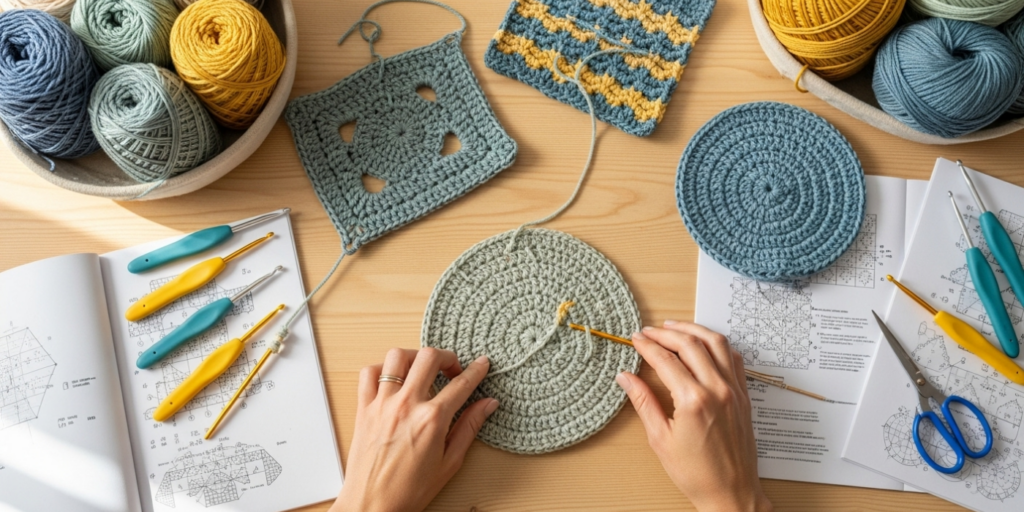
Consider Elena, a fiber artist who transformed her struggling Etsy shop by specializing exclusively in Tunisian crochet home textiles. After analyzing search data, she identified consistent demand for “reversible afghan blankets” with minimal competition in Tunisian techniques. Elena developed a signature method combining Tunisian knit stitch with strategic color pooling—using hand-dyed gradient yarns where the two-pass structure created organic watercolor effects impossible in standard crochet. Her breakthrough came when she documented her process through macro photography showing loops accumulating on the long hook, creating compelling social content that attracted interior designers seeking unique textiles. Within eighteen months, her shop shifted from sporadic sales to consistent wholesale contracts with boutique hotels, with pieces retailing at $350–$600 for queen-sized throws. Crucially, Elena maintained profitability by calculating precise yardage requirements upfront—her Tunisian-specific swatching protocol prevented costly mid-project yarn shortages that had previously eroded margins.
Another instructive case involves Marcus, a former software engineer who applied systems thinking to Tunisian garment construction. Frustrated by ill-fitting published patterns, he reverse-engineered the mathematical relationships between hook size, stitch multiples, and body measurements specific to Tunisian fabric’s unique stretch characteristics. Marcus developed a customizable sweater formula where crafters input their gauge and measurements to generate personalized stitch counts—published as a digital tool that became unexpectedly popular. His innovation wasn’t the pattern itself but the educational framework explaining why Tunisian requires different shaping calculations than knitting or standard crochet. This positioned him as an authority, leading to teaching invitations at major fiber festivals. Both examples demonstrate how technical mastery combined with market awareness creates sustainable business models—the technique itself is merely the foundation upon which entrepreneurial insight builds value.
Customization and Adaptation Ideas
Experienced crafters can transform standard Tunisian patterns into signature pieces through intentional customization strategies. Color sequence manipulation offers immediate impact: rather than following prescribed stripe patterns, develop personal systems like Fibonacci sequences (1,1,2,3,5 rows per color) or asymmetrical gradients that create sophisticated rhythm. When working with hand-dyed yarns, intentionally shift color placement between forward and reverse passes—starting a new color section during the reverse pass creates subtle marling effects as the two passes blend optically.
Structural adaptations yield even more distinctive results. Consider modifying edge treatments: instead of standard bind-offs, experiment with integrated i-cord borders worked simultaneously with the final rows—this requires holding two working yarns but eliminates finishing seams. For garment applications, replace conventional armhole shaping with strategic short-row techniques adapted for Tunisian’s two-pass system; this creates smoother sleeve caps that eliminate bulky underarm seams. I’ve successfully implemented this in sweater designs where short rows worked every fourth row across designated sections produce gentle curves that mirror knitted set-in sleeves.
Texture layering presents another frontier. Combine Tunisian fabric with carefully placed standard crochet elements: a shawl body worked in dense Tunisian simple stitch might feature delicate filet crochet medallions appliquéd at strategic points, or a blanket could incorporate raised popcorn stitches worked during reverse passes for dimensional interest. Critical consideration: always test adhesion methods on swatches first—Tunisian’s tight structure resists standard appliqué techniques. Instead, use the “join-as-you-go” method during the final reverse pass, working standard crochet stitches directly into vertical bars for seamless integration.
For business-minded crafters, develop signature modifications that become brand identifiers: a specific edge treatment, consistent color transition method, or proprietary stitch combination. Customers pay premiums for recognizable artistry—not just technical execution. Remember that customization should serve the design intent, not merely demonstrate skill; the most admired pieces balance innovation with wearability or functionality.
Care, Maintenance, or Best Practices
Tunisian crochet fabric demands specialized care protocols to maintain its structural integrity and aesthetic qualities over time. The technique’s density creates unique vulnerabilities: moisture absorption occurs more slowly than in standard crochet but penetrates deeper once saturated, increasing mildew risk if improperly dried. Always hand-wash Tunisian pieces in lukewarm water with pH-neutral wool wash—never machine agitate, as the mechanical action can felt fibers between densely packed loops. Submerge items completely and gently press water through fabric; avoid wringing, which distorts the vertical bar alignment fundamental to Tunisian structure.
Drying methodology critically impacts longevity. After rinsing, roll pieces in clean towels and press firmly to extract moisture—repeat with dry towels until minimal dampness remains. Never hang wet Tunisian garments; the weight of water-saturated dense fabric stretches vertical bars permanently. Instead, lay flat on a mesh drying rack in original dimensions, reshaping edges gently. For large items like blankets, rotate position every few hours during drying to ensure even moisture release and prevent water pooling in low spots.
Long-term storage requires proactive measures. Fold pieces loosely with acid-free tissue paper between folds to prevent permanent creases along vertical bar lines—these creases become difficult to remove through blocking alone. Store in breathable cotton bags with cedar blocks; avoid plastic containers that trap humidity. For frequently worn garments, implement a rotation system: allow 48 hours rest between wears for fibers to recover elasticity. Professional makers I advise conduct annual maintenance checks on sold pieces—offering complimentary re-blocking services builds remarkable customer loyalty while demonstrating commitment to quality beyond the point of sale. Remember that proper care transforms Tunisian pieces from seasonal accessories into generational heirlooms, justifying their premium positioning in your product lineup.
Monetization Opportunities
For experienced crafters seeking sustainable income streams, Tunisian crochet offers multiple monetization pathways beyond direct product sales—each requiring educational framing rather than promotional language. Pattern design represents the most accessible entry point: the technique’s relative scarcity in mainstream publishing creates opportunity for well-documented, size-inclusive patterns targeting specific niches (e.g., “Tunisian Crochet Swim Cover-Ups” or “Adaptive Tunisian Blankets for Wheelchair Users”). Successful designers structure patterns with technique tutorials embedded at relevant steps—not as afterthoughts—making complex methods approachable while showcasing expertise. Pricing psychology matters: tiered pricing (basic PDF, PDF with video support, kit bundles) captures different customer segments without devaluing core work.
Teaching generates significant revenue when positioned as skill elevation rather than beginner instruction. Experienced crafters command premium rates for advanced workshops focusing on Tunisian-specific challenges: colorwork adaptations, garment engineering, or finishing techniques. Virtual offerings expand reach—recorded masterclasses with downloadable resource packets provide passive income while live Zoom intensives create community. Crucially, avoid positioning as “easy”—the target audience values authentic challenge. Instead, market as “precision-focused” or “architecturally informed” to attract serious students.
Content creation offers indirect monetization through authority building. A blog or YouTube channel documenting Tunisian project development—showcasing swatching processes, troubleshooting sessions, and design iterations—builds audience trust that converts to pattern sales or custom commissions. One artisan I mentored grew her Instagram following by posting “loop close-ups” showing texture development across blocking stages; this technical transparency attracted wholesale buyers seeking authentic craftsmanship narratives. Affiliate marketing works effectively when recommending Tunisian-specific tools (long hooks, specialized stitch markers) with genuine usage context—never generic craft supplies.
Custom commissions thrive when framed as collaborative design processes. Position yourself as a textile engineer who solves client problems through Tunisian structure—e.g., “I specialize in creating lightweight yet warm shawls using Tunisian lace techniques for clients with temperature sensitivity.” This consultative approach justifies higher pricing while filtering unserious inquiries. Remember that sustainable monetization stems from demonstrating unique value—not competing on price in saturated markets. Your Tunisian expertise solves specific problems standard crochet cannot address; articulate those solutions clearly without hyperbolic claims.
Frequently Asked Questions
What distinguishes Tunisian crochet from regular crochet beyond the hook length?
The fundamental distinction lies in the stitch architecture: regular crochet completes each stitch individually before moving to the next, while Tunisian maintains multiple active loops on the hook throughout an entire row’s forward pass, only securing them during the return pass. This creates a fabric with vertical strands resembling knitted stockinette but with crochet’s inherent stability. The two-pass system generates denser fabric with less drape than comparable knitting but more fluidity than standard crochet—making it ideal for structured yet flexible garments. Additionally, Tunisian’s edge behavior differs significantly; without modification, it curls vertically rather than horizontally, requiring specific border techniques for flat pieces.
Can I use regular crochet hooks for Tunisian projects if I don’t have a long hook?
Technically yes for very narrow projects (under 15 stitches wide), but this severely limits your capabilities and risks hand strain. Standard hooks lack the stopper preventing loops from sliding off during forward passes, and their shorter length forces uncomfortable hand positioning when managing multiple loops. For anything beyond sampler swatches, invest in proper Tunisian hooks—interchangeable sets with cables prove most economical long-term. Attempting large projects with inadequate tools often leads to tension inconsistencies that compromise fabric quality, ultimately wasting more time and materials than purchasing appropriate equipment upfront.
How do I prevent my Tunisian fabric from curling at the edges?
Curling stems from the inherent tension imbalance in basic Tunisian simple stitch. Prevention strategies include: working border stitches in non-curling variations (Tunisian purl stitch or seed stitch) for first/last 4–6 vertical bars of each row; incorporating deliberate increases at edges during foundation rows to counteract pull; or designing projects where curling becomes intentional (rolled brim hats). For existing curled pieces, aggressive blocking with steam (not water) can relax fibers temporarily, but structural solutions during creation prove more reliable. Always swatch with intended border treatments before committing to large projects—what appears subtle in a 4-inch swatch becomes dramatic across garment widths.
Is Tunisian crochet faster or slower than standard crochet for large projects?
Experienced crafters typically work Tunisian at comparable or slightly faster speeds than standard crochet for equivalent fabric areas once muscle memory develops—the rhythmic two-pass system enables efficient hand motion. However, Tunisian consumes 15–25% more yarn per square inch due to its double-pass structure, potentially offsetting time savings through material costs. Speed advantages emerge in colorwork: Tunisian’s forward-pass color changes create cleaner transitions than standard crochet’s constant cutting/weaving, reducing finishing time significantly. For production purposes, calculate total project time including yarn costs and finishing requirements rather than stitches-per-minute metrics alone.
Can Tunisian crochet be worked in the round for seamless garments?
Yes, using double-ended Tunisian hooks or flexible cable hooks with stoppers on both ends. The technique requires working forward passes continuously around the tube, then reverse passes in the opposite direction—creating a spiral effect that demands careful stitch marking to maintain alignment. This method eliminates side seams but introduces new challenges: managing yarn joins without bulk, preventing twist accumulation in continuous rounds, and adapting shaping techniques for circular geometry. Most experienced makers reserve in-the-round construction for tubular items like cowls or sleeves, preferring flat construction with seaming for complex garments where precise shaping outweighs seamless benefits.
How does blocking differ for Tunisian crochet versus other techniques?
Tunisian fabric requires more aggressive blocking due to its density and memory. While standard crochet often needs only light steaming, Tunisian pieces typically demand full immersion blocking: submerge completely in lukewarm water with wool wash, gently press water through fabric without agitation, then pin meticulously to measurements on a foam mat. The dense structure resists stretching—apply firm but careful tension when pinning edges. Crucially, allow 24–48 hours drying time; rushing this process causes fabric to revert toward pre-blocked dimensions as residual moisture evaporates unevenly. For lace variations, use rust-proof pins to open eyelets fully during blocking—this step transforms stiff post-work fabric into fluid, drapey textiles.
Conclusion
Tunisian crochet offers experienced crafters a profound opportunity to transcend technical proficiency and develop distinctive artistic voices within the handmade marketplace. Its unique structural properties solve persistent challenges in drape, reversibility, and texture creation that limit standard techniques—while its relative obscurity preserves authentic artisanal appeal in an era of mass-produced homogeneity. Mastery extends beyond stitch execution into nuanced understanding of fiber behavior, strategic customization, and professional finishing protocols that transform competent work into heirloom-quality pieces. For business-minded makers, this technique provides multiple monetization pathways grounded in genuine expertise rather than trend-chasing—pattern design, specialized instruction, and consultative custom work all thrive when positioned as solutions to specific textile challenges. As you advance your practice, remember that true authority emerges not from complexity alone but from intentional application: every stitch choice should serve the design’s functional and aesthetic goals. Approach each project as both craft execution and textile engineering—considering how loop architecture interacts with fiber properties to create desired wearer experiences. The most enduring Tunisian pieces balance technical precision with human warmth, inviting touch while demonstrating structural intelligence. Continue documenting your process, sharing insights generously within craft communities, and challenging yourself with projects that stretch your capabilities without sacrificing finish quality. In doing so, you contribute to elevating Tunisian crochet from niche technique to respected discipline—ensuring its continued evolution while building sustainable creative practice rooted in authentic mastery.

Emily Harrison is a passionate crochet artist and creative entrepreneur, inspired by handmade craftsmanship, slow living, and the beauty of turning yarn into meaningful pieces. Driven by creativity and patience, she blends traditional techniques with modern design, constantly exploring new patterns and textures. Through her work, Emily shares her love for crochet as a form of self-expression, mindfulness, and creative freedom, while building projects that reflect authenticity, warmth, and continuous artistic growth.