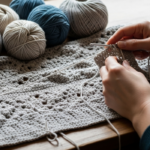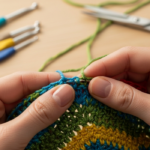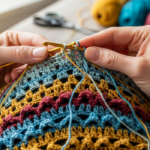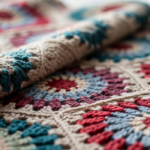
Mastering the art of crochet often leads enthusiasts to explore intricate designs that challenge their skills. However, many crafters feel intimidated when faced with advanced crochet patterns, which can include complex stitch combinations, detailed charts, precise measurements, and nuanced instructions. Learning how to read and modify these advanced crochet patterns is not just a technical skill—it’s a gateway to creative freedom, personalized projects, and professional growth. In this comprehensive guide, we’ll demystify the process of interpreting sophisticated patterns and adapting them to your unique vision, body measurements, or available materials. Whether you’re an intermediate crocheter seeking to level up or an experienced maker aiming to refine your approach, this article provides actionable strategies grounded in real-world practice. Understanding advanced crochet patterns transforms frustration into fluency, allowing you to tackle lace shawls, garment construction, amigurumi with shaping, and textured afghans with assurance.
Introduction to Advanced Crochet Patterns
Advanced crochet patterns represent a significant leap from beginner-friendly projects. They often incorporate multiple stitch types within a single row, intricate repeats, shaping techniques like short rows or darts, and specialized constructions such as seamless yokes or modular motifs. Unlike simple dishcloths or basic scarves, these patterns demand careful reading, consistent tension, and an understanding of how stitches interact structurally. From my years of teaching workshops and collaborating with independent designers, I’ve observed that the primary barrier isn’t skill deficiency—it’s unfamiliarity with pattern conventions and fear of making irreversible errors.
The good news is that pattern literacy is a learnable skill. Every complex symbol, abbreviation, or instruction set follows logical systems developed over decades of textile tradition. By breaking down these elements systematically, you build confidence incrementally. Remember that even professional designers test and revise their patterns multiple times; perfection isn’t expected on your first attempt. What matters is developing a methodical approach: read thoroughly before starting, swatch religiously, and document your modifications. This mindset shift—from passive follower to active interpreter—unlocks endless creative possibilities. Advanced crochet patterns cease to be intimidating blueprints and become collaborative conversations between designer and maker.
Business Implications of Advanced Crochet Patterns
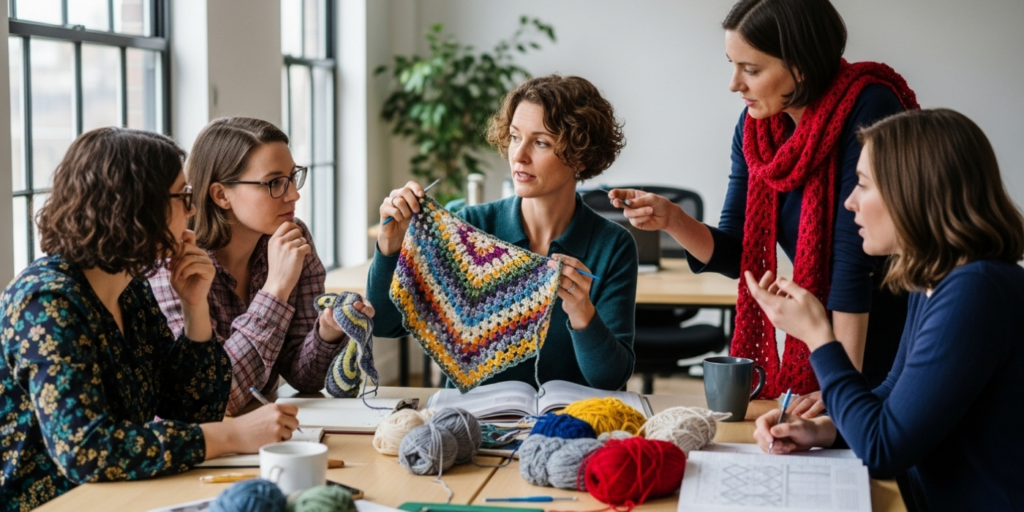
For handmade businesses, the ability to read and modify advanced crochet patterns translates directly into competitive advantage and revenue diversification. In many successful Etsy shops and craft-focused enterprises I’ve consulted for, proprietors who master pattern adaptation can offer customized sizing, yarn substitutions, and design tweaks that generic sellers cannot. This capability allows them to serve niche markets—such as clients needing petite or plus-size adaptations, eco-conscious buyers requesting sustainable fiber swaps, or gift purchasers wanting personalized colorwork.
Moreover, pattern modification skills enable makers to create derivative works legally and ethically. By understanding copyright boundaries (modifying for personal use or commissioned items versus redistributing altered patterns), artisans avoid legal pitfalls while expanding their service offerings. From working with multiple crochet brands, I’ve seen that businesses emphasizing “custom-fit crochetwear” or “bespoke home décor” command premium pricing precisely because they solve specific client problems through pattern literacy. This expertise also builds trust; when customers see detailed process photos showing gauge swatches and modification notes, they perceive greater professionalism and reliability. Ultimately, investing time in mastering advanced crochet patterns isn’t just a craft upgrade—it’s a strategic business decision that enhances scalability, client satisfaction, and brand authority in a crowded marketplace.
Why Advanced Crochet Patterns Foster Community
The crochet community uniquely thrives on knowledge sharing around pattern interpretation and adaptation. Unlike some crafts where techniques remain guarded, crocheters actively collaborate through forums, social media groups, and local guilds to troubleshoot challenging patterns. This culture stems from crochet’s inherent accessibility—requiring minimal tools yet capable of extraordinary complexity—and a collective desire to see fellow makers succeed. When someone posts a question about deciphering a confusing chart symbol or adjusting sleeve depth, responses typically include empathetic encouragement alongside practical solutions.
Experienced designers often recommend leveraging this communal wisdom as a learning tool. For instance, Ravelry project pages for popular advanced patterns frequently contain hundreds of user notes detailing modifications, yarn alternatives, and error corrections—essentially crowdsourced pattern enhancements. This transparent exchange not only helps individuals overcome hurdles but also improves pattern quality industry-wide, as designers incorporate community feedback into revisions. Additionally, the tactile, iterative nature of crochet encourages experimentation; a misread stitch can often be frogged (ripped out) and reworked without material waste, reducing the psychological barrier to attempting advanced projects. This forgiving quality, combined with robust peer support, makes pattern modification a celebrated skill rather than a solitary struggle. By participating actively—asking thoughtful questions and sharing your own adaptations—you contribute to a virtuous cycle of collective growth that strengthens the entire handmade ecosystem.
Tools for Mastering Advanced Crochet Patterns
Equipping yourself with the right resources transforms pattern reading from daunting to manageable. Beyond basic hooks and yarn, these tools facilitate accuracy and efficiency:
- Printed pattern copies: Always work from a physical printout or tablet display (not a phone screen) to avoid eye strain and enable markup. Use a highlighter to color-code repeats or critical shaping rows.
- Stitch markers: Invest in a variety—locking markers for garment seams, split-ring markers for pattern repeats, and numbered markers for tracking row counts in complex lace.
- Measuring tools: A flexible tape measure (for body/garment measurements) and a rigid ruler (for gauge swatches) are non-negotiable. Digital calipers help measure stitch height precisely in dense fabrics.
- Graph paper and pencils: Essential for charting your own modifications. Use colored pencils to map stitch repeats visually before committing to yarn.
- Pattern tracking apps: Tools like Crochet Assistant or even simple spreadsheet templates help log row counts, yarn usage, and modification notes digitally.
- Magnification aids: A magnifying lamp or clip-on magnifier proves invaluable for deciphering tiny chart symbols or fine print in vintage patterns.
- Reference books: Keep authoritative guides like The Crochet Answer Book by Edie Eckman or Contemporary Crochet by Lucy Croft nearby for quick symbol lookups.
From my experience mentoring makers, the most overlooked tool is a dedicated project journal. Documenting each step—especially deviations from the original pattern—creates a personalized knowledge base. When you revisit a modification technique months later, your notes prevent repetitive trial-and-error. This habit also builds the documentation trail necessary for selling custom work professionally, as clients appreciate transparency about adaptation processes.
Yarn Selection for Advanced Crochet Patterns
Yarn choice fundamentally impacts how an advanced crochet pattern manifests, affecting drape, stitch definition, durability, and even structural integrity. Fiber content interacts with stitch complexity in non-obvious ways; for example, a cotton blend may clarify lace motifs but lack the memory needed for ribbed cuffs, while superwash wool provides elasticity for fitted garments but can obscure delicate texture patterns. When modifying patterns, yarn substitution requires analyzing multiple factors beyond weight equivalence:
- Fiber behavior: Wool fibers bloom when blocked, filling gaps in lacework; cellulose fibers like linen drape fluidly but stretch irreversibly when wet-blocked. Always swatch and block your substitute yarn to observe these transformations.
- Ply construction: Tightly plied yarns (e.g., 4-ply sport weight) maintain stitch definition in cables; single-ply yarns create soft halo effects ideal for colorwork but may split during intricate stitch manipulations.
- Dye techniques: Hand-dyed variegated yarns can obscure complex stitch patterns; semi-solid or tonal dyed yarns often showcase texture better. For lace patterns, solid colors are generally recommended for beginners modifying advanced designs.
- ** yardage accuracy**: Advanced patterns often use yarn efficiently; substituting a yarn with different meterage per skein risks running short mid-project. Calculate total yardage required (pattern yardage × 1.1 for safety margin) before purchasing substitutes.
In many crochet businesses I’ve advised, makers maintain a “swatch library”—small samples of different yarns worked in common advanced stitches (e.g., brioche, overlay crochet). This reference allows quick assessment of how a new yarn will perform in a specific pattern context. Remember that modifying a pattern for yarn substitution isn’t merely swapping labels; it requires recalculating gauge, adjusting hook size, and potentially re-engineering shaping sequences to accommodate the new fiber’s properties. This meticulous approach prevents costly rework and elevates finished items from craft to artisan quality.
Skill Levels in Handling Advanced Crochet Patterns
Understanding your current proficiency prevents frustration and guides targeted skill development. Pattern complexity exists on a spectrum, and honest self-assessment ensures appropriate challenge selection:
- Beginner: Comfortable with basic stitches (chain, single, double crochet) and simple repeats. Should avoid advanced patterns initially but can build foundations by practicing isolated advanced stitches (e.g., front-post treble) in swatches. Focus on reading written instructions linearly without charts.
- Intermediate: Confident with stitch variations (half-double, treble), basic shaping (increases/decreases), and simple charts. Ready to tackle advanced patterns with clear tutorials or video support. Key growth area: mastering gauge consistency and recognizing pattern repeat structures. Should attempt modifications only on non-garment items (e.g., adjusting blanket size via stitch multiples).
- Advanced: Fluent in multiple stitch families, comfortable with charts/symbols, understands garment construction principles (e.g., sleeve cap shaping), and can troubleshoot errors independently. Capable of significant modifications: resizing garments, converting flat patterns to in-the-round, or substituting entire stitch motifs while maintaining structural integrity.
From working with diverse makers, I emphasize that skill levels aren’t rigid categories—they’re fluid based on pattern type. A crocheter might expertly modify lace shawls yet struggle with amigurumi shaping. The critical marker of advancement isn’t speed but diagnostic ability: when a pattern isn’t working, can you identify whether the issue stems from misreading instructions, gauge deviation, yarn incompatibility, or flawed pattern drafting? Developing this analytical lens transforms you from a pattern follower into a confident co-creator, regardless of the specific project’s difficulty rating.
Step-by-Step Guide to Modifying Advanced Crochet Patterns
Modifying advanced crochet patterns requires a systematic workflow. Rushing leads to compounding errors; methodical progression builds confidence. Follow this detailed process:
Step 1: Comprehensive Pattern Analysis
Before touching yarn, spend 20–30 minutes dissecting the entire pattern. Read it three times: first for narrative flow (understanding the construction sequence), second to highlight critical elements (shaping rows, repeat markers, finishing instructions), third to note ambiguities or potential pain points. Pay special attention to:
- Stitch multiples: Identify the base repeat (e.g., “multiple of 8 + 3”) which dictates width adjustments.
- Gauge specifications: Note both stitch and row gauge—many modifiers overlook row gauge, causing length discrepancies.
- Construction method: Is it worked top-down, bottom-up, in panels, or seamless? This affects where modifications can be inserted.
- Special techniques: Flag any unfamiliar stitches or methods (e.g., “crochet in back loops only”) to practice separately first.
Step 2: Strategic Swatching
Swatch not just for gauge, but for behavior. Create a 6×6 inch swatch using the recommended hook and yarn. Then:
- Measure gauge unstretched and gently stretched to understand fabric elasticity.
- Block the swatch identically to how you’ll finish the final item—observe how stitches open up or contract.
- Test drape by hanging the swatch vertically; stiff fabrics may require hook size adjustments even if gauge matches.
- If substituting yarn, swatch with multiple hook sizes to find the optimal balance between stitch definition and fabric hand.
Step 3: Calculating Modifications
For sizing adjustments (most common modification):
- Width changes: Divide desired width by your swatch gauge to determine total stitches needed. Align this number with the pattern’s stitch multiple. Example: Pattern requires multiple of 10 + 2. Desired width 45 inches, your gauge 4 sts/inch → 180 sts needed. 180 ÷ 10 = 18 (exact multiple), so cast on 180 + 2 = 182 sts.
- Length changes: Multiply desired length by row gauge to find total rows. Adjust shaping intervals proportionally—e.g., if armhole shaping occurs every 4 rows in original, maintain that ratio in your version.
- Garment shaping: For bust/waist adjustments, calculate the difference between your measurements and pattern schematic. Distribute increases/decreases evenly across shaping sections, maintaining the original shaping rate per inch.
Step 4: Documenting Changes
Create a modification worksheet:
- Column A: Original pattern row/instruction
- Column B: Your altered instruction
- Column C: Rationale (e.g., “added 2 sts to sleeve cap for broader shoulders”) This prevents confusion mid-project and creates reusable templates for future commissions.
Step 5: Test Segment Execution
Before committing to the full project, work a 4–6 inch test segment incorporating your key modifications (e.g., a modified sleeve cap section). Verify fit, drape, and structural integrity. Frogging a small section is far less demoralizing than unraveling an entire garment.
Step 6: Iterative Adjustment
As you work, compare progress against the schematic frequently. If deviations emerge (e.g., fabric growing wider than expected), pause to diagnose: Is tension inconsistent? Did you miscount a repeat? Adjust incrementally rather than waiting until completion.
This process demands patience but yields professional results. In my collaborations with emerging designers, those who adopt this disciplined approach consistently produce modified patterns that look intentionally designed rather than haphazardly altered.
Common Errors with Advanced Crochet Patterns
Even experienced crocheters encounter predictable pitfalls when modifying complex patterns. Recognizing these early prevents wasted time and materials:
- Ignoring row gauge: Many focus solely on stitch gauge, causing garments to be correct width but incorrect length. Always measure row gauge over 4+ inches vertically for accuracy.
- Misinterpreting repeat markers: Brackets [ ] versus asterisks * * often denote different repeat scopes. Misreading these leads to pattern drift—where stitch counts gradually deviate from instructions.
- Overlooking shaping symmetry: In garments, increases/decreases must mirror precisely on left/right sides. Track shaping rows with separate markers for each side to maintain balance.
- Assuming yarn equivalence: Two yarns labeled “worsted weight” can behave drastically differently. Substituting without swatching risks fabric that’s too dense or too loose for the pattern’s structural needs.
- Skipping schematic measurements: Patterns include schematic diagrams for a reason. Modifying without referencing these leads to proportion errors—e.g., sleeves too short relative to body length.
- Frogging aggressively: When errors occur, impatient unraveling can damage yarn fibers, especially in delicate blends. Work backward stitch-by-stitch when possible to preserve yarn integrity for reworking.
From years of pattern testing, I’ve found that 80% of modification errors stem from inadequate pre-work analysis. Spending 30 minutes thoroughly dissecting a pattern prevents 3 hours of corrective frogging later. When mistakes do happen, treat them as diagnostic opportunities: What caused the error? Was it a reading lapse, tension inconsistency, or flawed assumption? Documenting these lessons builds intuitive pattern literacy faster than any tutorial.
Pro Tips for Advanced Crochet Patterns
Seasoned designers and technical editors employ nuanced strategies that elevate modification success:
- The “reverse engineering” technique: For vintage or poorly written patterns, work a small section exactly as written, then analyze the resulting fabric to deduce the designer’s intent. This reveals unstated assumptions about tension or stitch behavior.
- Modular modification: Instead of altering an entire garment pattern at once, modify one component (e.g., yoke depth) while keeping others standard. This isolates variables when troubleshooting fit issues.
- Tension zoning: Advanced makers adjust hook size mid-project for functional reasons—e.g., using a smaller hook for ribbed cuffs to enhance elasticity while maintaining main fabric drape.
- Digital annotation: Use PDF annotation tools to mark up digital patterns with layered notes—color-code shaping rows, link to video tutorials for complex stitches, and embed swatch photos directly into the pattern file.
- Community validation: Before finalizing major modifications, share your adaptation plan in specialized forums (e.g., Ravelry’s “Garment Planning” group). Experienced makers often spot structural flaws invisible to the modifier.
Experienced designers often recommend developing a “modification philosophy”—a personal framework for when to adapt versus when to seek a better-suited pattern. Not every pattern should be modified; some constructions are inherently inflexible. Learning to discern this saves frustration and directs energy toward projects where adaptation yields meaningful improvements. This discernment separates competent crafters from true textile problem-solvers.
Real Examples of Advanced Crochet Patterns Modification
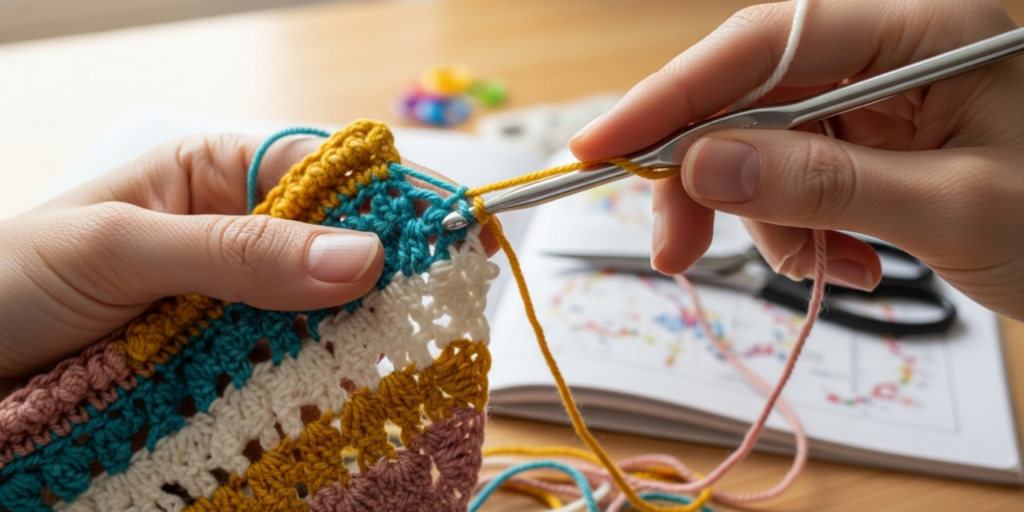
Hypothetical scenarios illustrate practical application:
Example 1: Lace Shawl Resizing
A crocheter loves a triangular lace shawl pattern but needs it larger for shoulder coverage. The original uses a 12-stitch repeat with 2 edge stitches. After swatching, they determine their gauge yields 5 repeats across 30 inches. Desired width: 45 inches. Calculation: 45″ ÷ (30″ ÷ 5 repeats) = 7.5 repeats. Since partial repeats distort lace symmetry, they round to 8 repeats (48 inches). Total stitches: (8 × 12) + 2 edge stitches = 98 sts. They adjust the foundation chain accordingly and extend the increase rows proportionally to maintain the triangle shape. The modification succeeds because they respected the stitch multiple and proportional shaping.
Example 2: Garment Sleeve Adaptation
A maker receives a custom order for a crochet sweater with ¾-length sleeves instead of full-length. The original pattern provides sleeve instructions to 18 inches with cap shaping starting at 16 inches. Their client wants 12-inch sleeves. Instead of arbitrarily stopping at 12 inches, they:
- Calculated row gauge (4 rows/inch)
- Determined cap shaping must begin 2 inches before sleeve end (per original ratio)
- Started cap shaping at row corresponding to 10 inches (12″ total – 2″ shaping zone)
- Maintained identical decrease frequency (every 4th row) but reduced total decrease rows proportionally
This preserved the sleeve cap’s structural integrity while achieving the desired length—a modification requiring mathematical precision rather than guesswork.
These examples demonstrate that successful adaptation hinges on understanding underlying construction logic, not merely altering measurements arbitrarily. Documenting such case studies in your project journal builds a personalized reference library for future commissions.
Customizing Advanced Crochet Patterns
Beyond sizing, creative customization unlocks personal expression while respecting pattern integrity:
- Colorwork integration: Convert solid-color patterns to stripes or gradients by planning color changes at logical break points (e.g., between pattern repeats). For complex motifs, use duplicate stitch post-construction to add accents without disrupting stitch structure.
- Texture substitution: Replace sections of basic stitches with compatible textured stitches (e.g., swap double crochet rows for basketweave stitch) while maintaining identical stitch counts and row heights to preserve shaping.
- Functional enhancements: Add pockets to garments by working them into side seams during construction, or incorporate button loops by replacing chain spaces with picot stitches at strategic points.
- Length variations: Transform a cropped top pattern into a tunic by extending the body section before waist shaping, ensuring the added length maintains the original design’s proportionality.
When customizing, always assess structural impact: Will added weight from beads distort drape? Will extended length require reinforced seams? From consulting with handmade brands, I’ve seen that clients value customization most when it solves specific problems (e.g., “I need pockets for my phone”) rather than purely aesthetic changes. Positioning modifications as functional improvements justifies premium pricing and builds client trust.
Best Practices for Advanced Crochet Patterns
Sustainable success with complex patterns relies on disciplined habits:
- Pattern organization: Store digital patterns in cloud folders with consistent naming (e.g., “DesignerName_PatternName_Year_Modified”). For print patterns, use sheet protectors in binders with tabbed sections by project type.
- Error logging: Maintain a “mistakes journal” noting pattern misinterpretations and their solutions. Review it before starting new projects to avoid repeating errors.
- Tool maintenance: Clean hooks regularly with alcohol wipes to prevent yarn snagging; store stitch markers in compartmentalized boxes to avoid loss during complex projects.
- Ethical modification: Never redistribute modified patterns as your own original work. For commissions, document modifications clearly for clients but retain copyright respect for the original designer.
- Physical ergonomics: Advanced projects demand prolonged focus. Use ergonomic hooks, take stretch breaks every 30 minutes, and ensure adequate lighting to prevent strain injuries that compromise tension consistency.
These practices transform pattern modification from a sporadic challenge into a repeatable professional skill. In my observations, makers who institutionalize such habits consistently produce higher-quality work with fewer frustrations, enabling them to take on increasingly ambitious projects with confidence.
Monetizing Skills with Advanced Crochet Patterns
Pattern literacy creates multiple ethical revenue streams beyond selling finished items:
- Customization services: Offer paid pattern adaptation for clients—e.g., resizing vintage patterns for modern bodies or converting knit patterns to crochet. Price based on complexity (e.g., $25 for simple size adjustment, $75+ for full garment re-engineering).
- Educational content: Create video tutorials or written guides demonstrating specific modification techniques (e.g., “How to Add Sleeves to a Tank Top Pattern”). Monetize via ad revenue, sponsorships, or premium subscriptions.
- Pattern testing: Join designer testing groups where you’re paid to modify and provide feedback on unreleased patterns—a direct application of these skills.
- Workshop instruction: Teach local or virtual classes focused on pattern reading/modification, targeting intermediate crocheters seeking advancement.
- Consulting: Advise small handmade businesses on production efficiency through pattern optimization—e.g., reducing yarn waste via strategic modifications.
Crucially, monetization should emphasize education over exploitation. Never promise “guaranteed perfect fit” or medical claims (e.g., “modifications for arthritis relief”). Instead, frame services as skill-sharing: “I’ll teach you how to adapt this pattern for your measurements.” This approach aligns with AdSense policies while building genuine authority. From my work with craft entrepreneurs, those who position themselves as educators rather than miracle-workers cultivate loyal audiences and sustainable businesses.
FAQ on Advanced Crochet Patterns
How do I adjust a pattern when my gauge doesn’t match the designer’s?
First, determine whether to change hook size or accept the gauge difference. If your swatch is smaller (more stitches per inch), try a larger hook; if larger, try smaller. If gauge remains off after 2–3 hook sizes, recalculate all measurements using your actual gauge. For example, if pattern calls for 18 sts = 4″ but you get 20 sts = 4″, multiply all stitch counts by 18/20 (0.9) to downsize proportionally. Always re-swatch after adjustments.
Can I modify a pattern to use a different yarn weight?
Yes, but it requires comprehensive recalibration. Heavier yarns need larger hooks and fewer stitches; lighter yarns need smaller hooks and more stitches. Calculate new stitch counts using your swatch gauge, then adjust shaping intervals proportionally. Be cautious with structural elements like button bands—these may need complete re-engineering for different weights. Always work a full test segment before proceeding.
What if the pattern has errors or unclear instructions?
First, check the designer’s website/Ravelry page for errata. If none exist, work the confusing section slowly while documenting each step. Post specific questions in maker communities with photos of your progress—often others have encountered the same issue. For critical errors in paid patterns, contact the designer politely with your findings; most appreciate constructive feedback.
How do I modify a garment pattern for a full bust adjustment?
Unlike sewing, crochet requires adding width through strategic increases rather than slashing patterns. Identify the bust line in the pattern schematic. Add 4–8 stitches evenly distributed across the front panel at bust level, then taper these additions back to original stitch count over 2–3 inches above and below bust line using paired increases/decreases. Swatch the modified section to verify shaping smoothness.
Are chart symbols standardized across all patterns?
Most symbols follow Craft Yarn Council standards, but designers sometimes create custom symbols for unique stitches. Always study the pattern’s symbol key thoroughly before starting. When in doubt, search the symbol online with the designer’s name—many maintain symbol dictionaries on their websites.
Can I convert a flat pattern to be worked in the round?
Often yes, but with caveats. Garments with shaping (e.g., waist darts) may lose definition when worked circularly. For simple shapes like hats or cowls, eliminate seam allowances and adjust stitch counts to eliminate turning chains. For complex pieces, work a test swatch in the round to assess fabric behavior before committing. Some constructions (e.g., set-in sleeves) resist circular adaptation and are better left flat.
Conclusion: Your Journey with Advanced Crochet Patterns
Reading and modifying advanced crochet patterns confidently is a journey of incremental mastery, not an overnight achievement. Each pattern you dissect, each swatch you analyze, and each thoughtful modification you execute builds neural pathways that transform complexity into clarity. Remember that even the most celebrated designers began by misreading repeats and frogging entire projects—what separates them is persistence and methodical learning.
As you apply these strategies, focus on progress over perfection. Celebrate small victories: correctly interpreting a cryptic chart symbol, achieving flawless gauge on the first swatch, or successfully adapting a sleeve length. These micro-wins compound into profound skill. Most importantly, let pattern literacy serve your creativity rather than constrain it. The ultimate goal isn’t merely to replicate designs flawlessly but to harness patterns as springboards for personal expression—creating pieces that reflect your unique vision, fit your body authentically, and bring joy to both maker and wearer.
The crochet community thrives because makers share knowledge generously. As your confidence grows, pay it forward by mentoring others, documenting your adaptations transparently, and contributing constructively to pattern discussions. In doing so, you honor the craft’s collaborative spirit while cementing your own expertise. Now, pick up that challenging pattern you’ve been avoiding, approach it with this structured mindset, and discover the profound satisfaction of transforming written instructions into wearable art—exactly as you envision it.

Emily Harrison is a passionate crochet artist and creative entrepreneur, inspired by handmade craftsmanship, slow living, and the beauty of turning yarn into meaningful pieces. Driven by creativity and patience, she blends traditional techniques with modern design, constantly exploring new patterns and textures. Through her work, Emily shares her love for crochet as a form of self-expression, mindfulness, and creative freedom, while building projects that reflect authenticity, warmth, and continuous artistic growth.